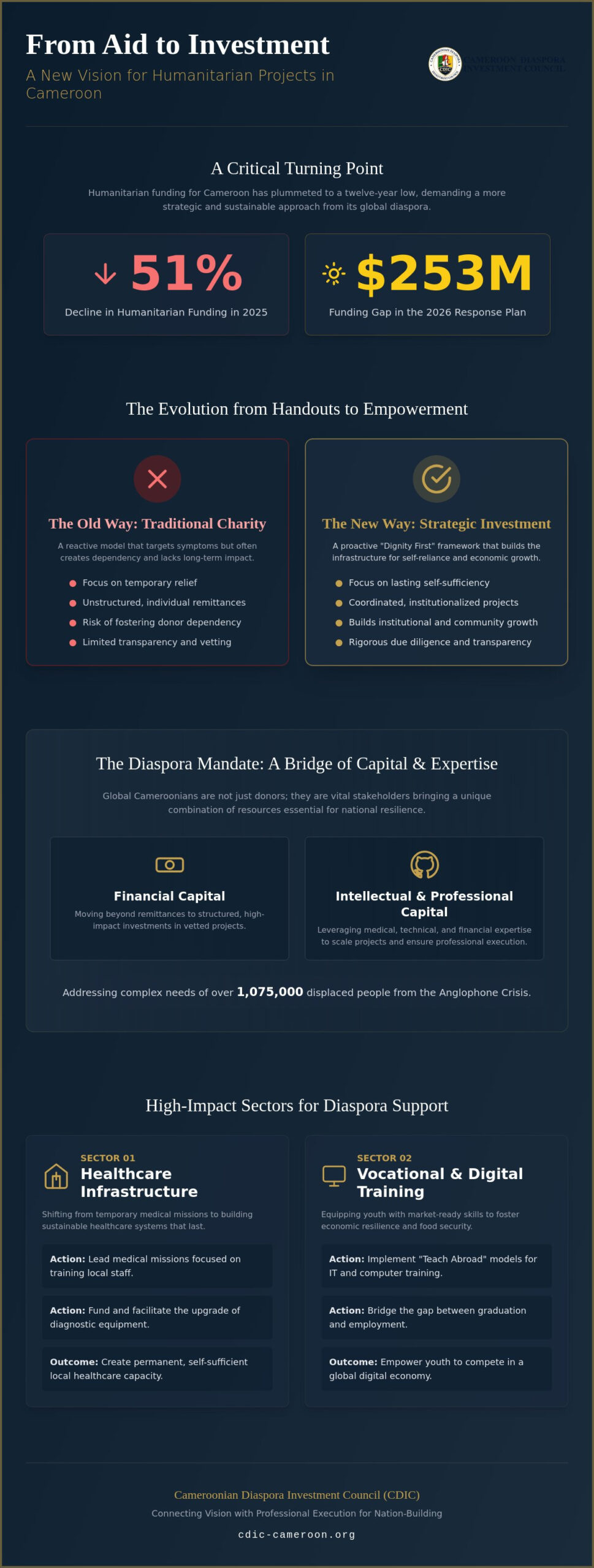
Did you know that humanitarian funding for Cameroon plummeted by 51% in 2025, marking a twelve-year low? This decline has left a staggering $253 million gap in the 2026 response plan, underscoring the urgent need for a more strategic approach to humanitarian projects in Cameroon. You likely feel a profound sense of duty to your heritage, yet you’re tired of “handout” models that fail to address systemic poverty. It’s frustrating to send hard-earned resources home without a clear view of their impact or a reliable way to vet the legitimacy of local organizations from abroad.
We understand that your goal isn’t just to give, but to invest in the dignity and future of your community. This guide provides a credible framework to transition from traditional charity to high-impact initiatives that align with the national Vision 2035. You’ll discover how to navigate a vetted network of local stakeholders and apply a professional methodology to community development. By moving from temporary relief toward institutionalized growth, we can ensure your contributions create the lasting economic self-sufficiency that Cameroon deserves.
Key Takeaways
- Understand the transition from temporary relief to strategic nation-building as a core responsibility of the global diaspora.
- Identify high-impact opportunities for humanitarian projects in Cameroon within critical sectors like sustainable healthcare infrastructure and vocational training.
- Adopt a “Dignity First” framework that prioritizes social impact investing to foster long-term community self-sufficiency rather than donor dependency.
- Utilize institutional portals and rigorous due diligence to ensure financial transparency and track measurable project milestones from abroad.
- Access a structured path for engagement through tiered memberships that bridge the gap between humanitarian vision and professional execution.
The Evolution of Humanitarian Projects in Cameroon: A Diaspora Mandate
Humanitarianism in Cameroon is undergoing a profound transformation. It no longer functions solely as a reactive mechanism for crisis management. Instead, it has evolved into a sophisticated blend of urgent relief and strategic nation-building. For the global diaspora, this shift represents a “Diaspora Mandate.” You aren’t merely distant observers; you are the most vital stakeholders in the nation’s progress. While traditional charity often targets the immediate symptoms of poverty, sustainable community development seeks to build the infrastructure of self-reliance. This approach serves as the critical foundation for Vision 2035, the national roadmap toward an emerging economy. By aligning humanitarian projects in Cameroon with these long-term goals, we move beyond temporary aid toward permanent stability.
Beyond Remittances: The Shift to Strategic Impact
Remittances have long been a lifeline for families, yet unstructured money transfers rarely address systemic challenges. Structured projects offer a level of institutional governance that individual transfers cannot match. They provide transparency, measurable outcomes, and professionalized “giving back” models. When we move from ad-hoc assistance to coordinated efforts, we ensure that resources aren’t just consumed but are invested in the future. This transition requires a commitment to excellence and a move away from the “handout” culture that often limits long-term growth. Professionalizing these efforts ensures that every dollar spent contributes to a larger, more durable framework of national resilience.
The Role of the Diaspora in National Resilience
The diaspora brings more than just capital; you bring a wealth of medical, technical, and financial expertise. This intellectual capital is essential for scaling the impact of humanitarian projects in Cameroon. With a heritage that encompasses over 200 languages and immense cultural diversity, global Cameroonians possess a unique ability to navigate local nuances. This cultural intelligence is particularly vital when addressing the complex needs arising from the Anglophone Crisis in Cameroon, which has displaced over 1,075,000 people. By leveraging your professional networks and specialized skills, you provide the precision needed for complex interventions. Your involvement ensures that humanitarian work is not a distant act of pity but a collaborative effort in nation-building. The diaspora serves as a catalytic bridge between global resources and local needs.
Core Sectors of Need: Where Diaspora Support Matters Most
The current humanitarian situation in Cameroon presents a complex landscape of overlapping crises, from displacement in the Lake Chad Basin to refugee influxes in the East. While immediate aid remains vital, the diaspora’s unique value lies in transitioning these efforts toward systemic stability. By focusing on specific high-impact sectors, global Cameroonians can transform the nature of humanitarian projects in Cameroon, moving from temporary relief to permanent development. This strategic focus ensures that every intervention serves as a building block for national resilience.
Healthcare Infrastructure and Medical Missions
Healthcare requires a shift from awareness campaigns to the establishment of sustainable medical infrastructure. While malaria and dengue fever continue to strain the public health system, the solution isn’t just more medication; it’s better facilities and diagnostic capacity. Diaspora medical professionals possess the expertise to lead this transition. Through medical missions that focus on training local staff and upgrading equipment, we can create permanent healthcare improvements. Professionals looking to contribute their skills can register via the Service Provider Portal to match their expertise with specific community needs.
Vocational Training and Digital Literacy
Equipping the youth with market-ready skills is the most effective way to foster economic resilience. Traditional education models often leave a gap between graduation and employment, particularly in rural areas. “Teach Abroad” models that focus on IT and computer training provide local youth with the tools to compete in a global digital economy. This isn’t just about jobs; it’s about food security. There is a direct link between vocational education and reducing the “hunger gap” in rural communities. When youth are trained in modern agricultural techniques or digital entrepreneurship, they create immediate employment pathways that support their entire families. These vocational centers become hubs of innovation that drive local economies forward.
For those interested in how these hubs can evolve into world-class tech sectors, specialized accelerators like Incubou demonstrate the potential of focusing on high-demand fields such as cybersecurity to build a secure and prosperous digital future.
Food Security and Inclusive Governance
Achieving food sovereignty requires more than just seeds; it requires a commitment to rural empowerment. Supporting rural communities in adopting sustainable farming practices ensures long-term nutrition for the millions projected to face food insecurity. For diaspora members seeking to channel resources into this space, exploring vetted rural development projects in Cameroon provides a structured pathway to maximize agricultural and community impact. Simultaneously, inclusive governance initiatives must empower women and marginalized groups. Community-led humanitarian projects in Cameroon that prioritize local leadership ensure that aid reaches the most vulnerable while fostering a culture of accountability. These efforts are the building blocks of a resilient society where every citizen has the agency to contribute to national progress. By focusing on these core sectors, the diaspora can ensure their contributions foster long-term dignity and development.
The “Dignity First” Framework: Aid vs. Sustainable Development
True humanitarianism isn’t defined by the mere delivery of goods; it’s defined by the restoration of human agency. The “Dignity First” model shifts the focus from managing poverty to creating the conditions for self-sufficiency. While pure donations provide essential life-saving relief, social impact investing builds the institutional systems that eventually make aid unnecessary. Although EU humanitarian aid to Cameroon addresses critical gaps in shelter and nutrition, the diaspora’s strategic role is to ensure these interventions lead to long-term economic resilience. When humanitarian projects in Cameroon are designed as investments rather than simple transfers, they create a powerful “multiplier effect” within local economies.
This approach also carries a profound psychological weight. Diaspora-led projects foster a deep sense of national pride by demonstrating that Cameroonian solutions can solve Cameroonian challenges. It’s a move toward a partnership of equals, where global expertise meets local ambition to build a future rooted in stability and excellence. By prioritizing dignity, we ensure that every initiative contributes to a legacy of independence rather than a cycle of dependency.
Handouts vs. Empowerment: A Comparative Analysis
The difference between relief and development is best seen in the tools provided. Food aid acts as a temporary shield against immediate hunger, yet an irrigation system serves as a permanent sword against recurring drought. The former addresses today’s crisis; the latter prevents tomorrow’s. This is the core of sustainable growth. The ROI of social impact in Cameroonian villages is realized when local entrepreneurs replace international donors as the primary drivers of community growth. For those seeking to understand how these initiatives integrate with broader national goals, exploring the Strategic Investment Pillar provides the necessary depth on institutional methodology and economic context.
Empowering Women and Youth through Inclusive Governance
Dignity is also deeply tied to inclusive governance and the empowerment of marginalized groups. Modern humanitarian projects in Cameroon increasingly focus on the construction of dedicated women’s centers, which serve as hubs for vocational training, healthcare, and civic engagement. These spaces ensure that development is not just broad but equitable. Longevity in these projects is achieved through “Inclusive Governance,” a model where local leadership is embedded into every stage of the project lifecycle. The CDIC Ambassador Program exemplifies this leadership model, empowering global professionals to represent these national interests. By fostering local ownership, we ensure that the impact of every initiative outlives the initial investment phase.
Navigating the Landscape: How to Vet and Scale Projects
Engaging with humanitarian projects in Cameroon requires a fundamental transition from emotional response to institutional rigor. While the desire to give back is often sparked by personal connections, the long-term success of any initiative depends on professional due diligence. Vetting is the essential bridge between noble intentions and measurable impact. Without a structured verification process, even the most well-funded efforts risk stalling due to lack of transparency or operational inefficiencies. By applying the same standards you would to a private equity investment, you ensure that your contributions foster the dignity and self-sufficiency discussed in the previous section.
Technology now provides the tools necessary to bridge the geographic gap between the diaspora and local execution. Modern investor portals allow you to track project milestones and financial expenditures with a level of precision that was previously impossible. This digital oversight is complemented by the “boots on the ground” presence of the CDIC Ambassadors Program. These global leaders provide the local verification and institutional oversight required to ensure that funds are utilized for their intended purpose. Collaborative models that scale existing, successful initiatives are often more effective than starting new projects from zero, as they leverage established trust and local expertise.
A Checklist for Diaspora Humanitarians
Before committing resources to any initiative, we recommend a rigorous four-step vetting process to protect your investment and maximize community benefit. This professional methodology includes:
- Registration Check: Verify that the local NGO is officially registered with the appropriate Cameroonian authorities and maintains a valid legal status.
- Impact History: Analyze documented outcomes from previous years rather than just reviewing planned activities.
- Financial Transparency: Demand clear ledger tracking or third-party audits to understand exactly how capital is allocated.
- Sustainability Plan: Ensure the project has a clear roadmap for community ownership once the initial funding phase concludes.
You can utilize the CDIC Investor Portal to access a database of projects that have already undergone this preliminary screening. For a comprehensive breakdown of risk mitigation strategies, consult our Safe Ways to Invest in Cameroon checklist.
Scaling Grassroots Initiatives to National Programs
The most successful community development often begins at the village level before expanding to regional or national scales. Moving a project from a local success story to a broad infrastructure-linked program requires “Collective Diaspora Capital.” This isn’t just about pooling money; it’s about pooling influence and expertise. Corporate Membership plays a vital role here, as it provides the institutional weight needed to fund large-scale work such as vocational centers or permanent healthcare facilities. When we scale these grassroots initiatives, we transform individual acts of kindness into systemic engines of national growth. The power of collective action allows us to build the infrastructure that underpins the Vision 2035 roadmap.
To begin your journey toward safe and impactful engagement, we invite you to complete your Investor Portal Registration and explore our vetted network of local stakeholders.
The CDIC Bridge: Turning Humanitarian Vision into Action
The Cameroonian Diaspora Investment Council (CDIC) serves as the definitive institutional home for global citizens committed to national progress. It acts as the operational engine that transforms high-level humanitarian projects in Cameroon from aspirational concepts into tangible realities. Through a tiered membership structure, we provide a formalized pathway for engagement that moves beyond the limitations of individual effort. Individual and Corporate Memberships don’t just provide access; they fund the strategic initiatives that underpin community development across the nation. This is a move toward institutionalized excellence, where your membership is a direct investment in the structural integrity of Cameroon’s future.
We recognize that the diaspora’s value extends far beyond financial capital. The Service Provider Portal is designed specifically for professionals who wish to donate their specialized skills to national initiatives. Whether your expertise lies in civil engineering, healthcare administration, or digital governance, this portal matches your professional profile with specific project needs. It’s a system built on the belief that professional contribution is the highest form of “giving back,” ensuring that local initiatives benefit from global standards of excellence. By centralizing these resources, we create a steady, reassuring flow of progress that suggests a well-thought-out and sustainable operation.
The CDIC Ambassador Program: Leadership in Development
For those ready to take a more proactive role, the CDIC Ambassador Program offers a unique platform for leadership. Members can become Ambassadors to lead specific humanitarian portfolios, overseeing the transition from vision to execution on the ground. This role provides significant networking benefits, connecting you with other high-level diaspora professionals and local stakeholders who share a commitment to national resilience. For those looking to master the art of professional connection, you can discover Network In Action and explore their model for leading local business referral groups. Ambassadors act as the essential link between potential and realization, ensuring that every project maintains the professional polish and strategic intelligence the brand represents. It’s a leadership model that prioritizes impact, accountability, and the collective ambition of our global community.
Joining the Council: Your First Step Toward Impact
Becoming a member is more than an administrative step; it’s an act of dignified optimism. By joining the council, you gain immediate access to the Investor and Service Provider portals, providing the transparency and vetting tools necessary for safe engagement. You’re no longer navigating the complex humanitarian landscape alone. Instead, you’re part of a sophisticated facilitator that understands complex systems and remains focused on community impact. We invite you to move from the sidelines of development to the center of national transformation. Join CDIC today to empower your vision for Cameroon and help us build a future defined by dignity, stability, and shared prosperity.
Empowering the Next Chapter of National Development
The evolution of your engagement with the homeland begins with a fundamental shift in perspective. Moving beyond temporary relief allows you to foster the long-term dignity and economic self-sufficiency that define Vision 2035. By adopting a “Dignity First” framework, you ensure that every intervention serves as a building block for permanent stability rather than a cycle of dependency. Professionalizing your approach to humanitarian projects in Cameroon requires the right institutional partner to provide the necessary oversight and strategic alignment.
CDIC stands as your essential link between potential and realization. Through our council, you gain access to the Investor Portal for vetted opportunities and join a global elite professional network dedicated to excellence. We provide the institutional support required for project development and execution; ensuring your vision translates into measurable impact. It’s time to transition from a distant observer to a proactive facilitator of national progress. Our collective ambition is the fuel that will drive the nation toward its emerging status.
Become a CDIC Member and Lead a Project to take your place at the forefront of Cameroon’s realization. Together, we can build a legacy of prosperity, independence, and shared pride.
Frequently Asked Questions
What are the most urgent humanitarian needs in Cameroon in 2026?
The most critical needs in 2026 include food security, water, sanitation, and nutrition, with the humanitarian response plan currently only 20% funded as of March 2026. Sectors like WASH and food security face severe budget gaps, leaving millions at risk. Addressing these through humanitarian projects in Cameroon requires a focus on high-impact interventions that provide both immediate relief and long-term resilience in the most affected regions.
How can the diaspora ensure their donations reach the intended projects?
Diaspora members can ensure accountability by utilizing the CDIC Investor Portal to track measurable project milestones and financial expenditures. This digital transparency is reinforced by the CDIC Ambassadors Program, which provides local oversight to verify that resources are applied correctly. By moving away from informal transfers and toward institutionalized platforms, you gain a credible framework for supporting community development while minimizing the risk of mismanagement.
Is it better to start a new NGO or support existing humanitarian projects in Cameroon?
Supporting existing, vetted initiatives is generally more efficient than starting from zero because it leverages established trust and local expertise. However, if you have a unique vision, our Project Developers support system provides the necessary guidance to launch new, sustainable initiatives correctly. Scaling grassroots projects allows for a faster transition to national impact, ensuring that your contributions foster systemic growth rather than administrative redundancy.
What role does CDIC play in vetting local community development initiatives?
CDIC performs rigorous institutional due diligence by verifying the legal registrations, impact histories, and sustainability plans of local organizations. We act as a sophisticated bridge-builder, ensuring that every initiative on our platform meets high standards of professional integrity. This vetting process provides the diaspora with a secure environment to engage in humanitarian projects in Cameroon, replacing uncertainty with strategic confidence and long-term reliability.
Can I provide professional services (like medical or legal) instead of financial aid?
You can absolutely contribute your expertise through the Service Provider Portal, which matches professionals with specific community needs. Whether you’re offering medical missions, legal counsel, or technical training, your skills are a vital form of catalytic capital. This model allows you to transition from traditional charity to a professionalized “giving back” approach, directly supporting the national goal of building a robust, self-sufficient infrastructure.
How do humanitarian projects align with Cameroon’s Vision 2035?
Humanitarian initiatives serve as the essential foundation for Vision 2035 by shifting the focus from temporary aid to permanent economic development. By building sustainable medical infrastructure and vocational centers, these projects create the self-sufficiency required for an emerging economy. This strategic alignment ensures that every act of humanitarianism contributes to the broader national roadmap, fostering long-term dignity and reducing the need for foreign assistance.
Are there tax benefits for diaspora members supporting NGOs in Cameroon?
While tax regulations vary by your country of residence, CDIC provides the institutional documentation and transparency required to support claims for philanthropic contributions. Many jurisdictions offer incentives for supporting registered NGOs that meet specific governance standards. We recommend consulting with a financial professional in your region to maximize the fiscal benefits of your commitment to community development and national resilience.
What is the difference between a project developer and a CDIC Ambassador?
A Project Developer focuses on the operational execution and launch of specific initiatives, while a CDIC Ambassador serves as a high-level representative who leads broader humanitarian portfolios. Ambassadors provide the essential link between global resources and local needs, offering oversight and strategic guidance to multiple projects. Both roles are critical to our “vision-to-execution” logic, ensuring that diaspora engagement is both impactful and professionally managed.